


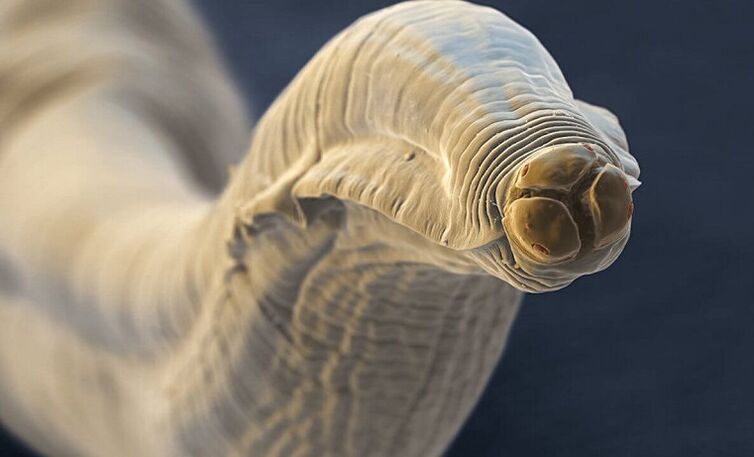
Many diseases and disorders in the human body are caused by parasites;symptoms may not appear for many years, so most people do not even realize that they are carriers of certain harmful organisms.There are many types of parasitic worms for which the human body is a natural habitat.
Parasites are named after their feeding habits.Unlike bacteria involved in the digestive process and in symbiosis with humans, parasites do no good to the host.They steal nutrients and cause many diseases during their life processes.
The main types of parasites found in humans
Many types of parasites can live and multiply in the human body, and they can enter the body in many ways.Many people think that they wash their hands and food thoroughly enough to avoid getting such "free prey", but practice shows that even the most extreme measures cannot completely protect a person.
Statistics show that more than 95% of the world's population is infected with one or another type of parasite.
The diversity of human endoparasites is so great that not all possible invasions have been investigated at this time.Only more than 250 species of parasitic worms are currently known, and they can live not only in the intestines, but also in other organs, such as the brain, heart, lungs, liver, muscle fibers, hair and nails.In fact, any organ in the human body can easily become a home for a variety of parasites.There are quite a few parasites that are commonly found in humans.
- Roundworms.According to statistics, about 100 million people are infected with this parasite every year.Damage usually occurs due to ingestion of unwashed vegetables and contaminated objects.Roundworms attack the tissues of the brain, intestines, eyes, heart, lungs and liver.These organisms feed on red blood cells and nutrients.It can be spread not only by humans, but also by animals
- Pinworms.Common parasite in groups of children.Infection is usually on dirty hands, dirty household items, soft toys, etc.is done throughWorms live in the large and small intestines.Worm eggs ripen quickly.Adults rarely reach a size larger than 1 cm.
- Tapeworms.Tapeworms include a large group of parasites, including cattle, pig, dog, dwarf tapeworms, and broad tapeworms.These organisms do not have their own digestive system, so they extract nutrients from the body.These organisms are particularly fond of vitamin B12 and folic acid, so patients with these parasites are severely deficient in these elements.
- Toxocara.A parasite that usually affects dogs, but can be transmitted to humans through close contact with an animal.The length of an adult individual can be 30 cm.Almost any organ and tissue can be affected, but the prognosis is particularly poor if the eyeball is involved, as this possibility requires surgical removal of the affected eye.
- Alveococcus and Echinococcus.These microorganisms typically enter the human body through contact with an infected animal carrier or its excrement.The carriers are often foxes.In the human body, these parasites can enter any organ, but they especially like the liver and lungs.They then form cysts that contain entire colonies of these organisms.Rupture of the cyst can cause an acute allergic reaction and anaphylactic shock.
- Hookworm.The parasite is very similar to the roundworm.The infection usually occurs through the skin when walking barefoot, or through unwashed vegetables and fruits.
- Roundworms.A whole group of parasites that can reach a length of 40 cm.It can affect almost every organ and tissue.During their lifetime, they release toxic waste into the bloodstream.A representative of roundworms, Trichinella is the causative agent of trichinosis.This disease is extremely dangerous and has a serious course, which is why it leads to the death of the patient in 30% of cases.
- Whipworm.This parasite is the causative agent of trichocephalosis.Damage occurs when food and water contaminated with the pathogen's eggs are consumed.In addition, infection can occur through household items.Whipworm larvae feed on blood and lymph nodes, which they suck from the capillary wall of the intestine.The lifespan of the parasite is about 5 years.
- Trematodes.This is a common type of flatworm that can parasitize lung tissue, blood vessels, intestines, and liver.Infection with these parasites usually occurs through the consumption of improperly processed fish or crustacean meat.
Symptoms of parasitic infection
In order to live normally in the human body, the parasites attach themselves to the walls of the organs with the help of chitin plastics, hooks, hard hairs, and suction discs, which irritate the tissues, causing inflammatory processes.In addition, these organisms steal nutrients, suppress the immune system, poison the body with waste products, and under certain conditions can eat healthy tissue, causing significant damage.
Parasites can exist in the body for a long time without causing obvious manifestations, but they can reveal their presence in case of frequent overload, hypothermia, weakened immunity and other unfavorable conditions.There are several symptoms that are common in people with parasitic infections, including:
- general weakness and chronic fatigue;
- sudden weight loss or, on the contrary, weight gain;
- constant feeling of hunger;
- problems with stool;
- headache and migraine;
- muscle pain;
- joint pain;
- various skin manifestations;
- insomnia;
- reduced immune system;
- allergic reactions;
- increased nervousness;
- reduced performance.
The intensity of the manifestation of parasites in the body depends not only on the type of parasites, but also on the extent to which they damage certain tissues.For example, if there are parasites in the liver, symptoms of liver failure may occur.When these organisms damage the lungs, severe coughing and even signs of choking may occur.In the case of brain damage from parasites, the manifestations can be very diverse, including seizures, convulsions, etc.Signs of the presence of parasites in the human body may not show obvious symptoms for a long time, therefore preventive diagnostics must be performed from time to time in order to accurately determine the presence of parasites.
Principles of treatment of parasitic infections
In order to effectively treat parasitic infections, the type of parasite must first be determined.It is most often used to identify the parasite:
- blood test for the presence of parasite eggs;
- histology program;
- hemoscanning;
- serological test.
All medical anthelmintic drugs can be divided into drugs containing chemically synthesized substances and herbal drugs.Treating a parasite infection is often an extremely difficult task, as chemicals, although effective in most cases, are highly toxic and therefore dangerous not only to the parasites but also to the human body.After identifying the type of parasite, the doctor should prescribe a treatment regimen of anti-parasitic drugs.Herbal preparations are safer because they contain natural poisons that parasites cannot tolerate but are not dangerous for humans.However, the disadvantages of such agents include the fact that they are not effective against all types of parasitic infections.
Methods of preventing parasitic infections
In fact, it is extremely difficult to completely protect yourself from infections caused by parasites, since their eggs are extremely resistant and can remain without a host for a long time.However, there are a number of rules that can significantly reduce the risk of infection.Above all, you should pay attention to hygiene and wash your hands thoroughly before eating.
In addition, always carry antibacterial wipes with you, which will be very useful in cases where you cannot wash your hands or disinfect the surface.
The products may only be purchased in specialist shops that have all the certificates proving their safety.All vegetables, including leafy greens and fruits, should be rinsed with boiling water before consumption.Beef, pork and poultry, as well as fish and crab, should be properly cooked.If you intend to boil or fry it, it is very important not to taste the raw meat.Inadequately salted fish meat can cause parasitic infections, so do not eat such foods if they have not been kept in brine for a sufficient amount of time.
If there are pets in the house, they should be given preventive vaccinations to protect the animal and its owners from the spread of parasites.Preventive tests to detect the presence of parasites help to avoid dangerous complications.